Selecting a CNC drilling machine should begin with a set of real component drawings. The useful comparison is how a proposed configuration handles your hole patterns, workpiece sizes and production information. A model name alone does not explain the complete process. Prepare a small but representative set of cabinet parts, including the components that cause the most difficulty in your present workflow. Use this set consistently when discussing machines, so that differences in demonstrations reflect the proposed configuration rather than a change in the sample being processed.
1. Describe the complete machining requirement
For every sample, identify the faces to be processed, the hole positions, hole dimensions and any required grooves or additional operations. Distinguish a drawing requirement from an assumption about how it will be manufactured. Ask the supplier which operations the proposed machine will perform in one agreed process and which require additional handling or another machine. Confirm the relevant working range and any restrictions using the exact configuration offered. Do not assume that the phrase “six-sided drilling” guarantees every possible hole direction, tool arrangement or component geometry.
2. Compare configurations with the same test set
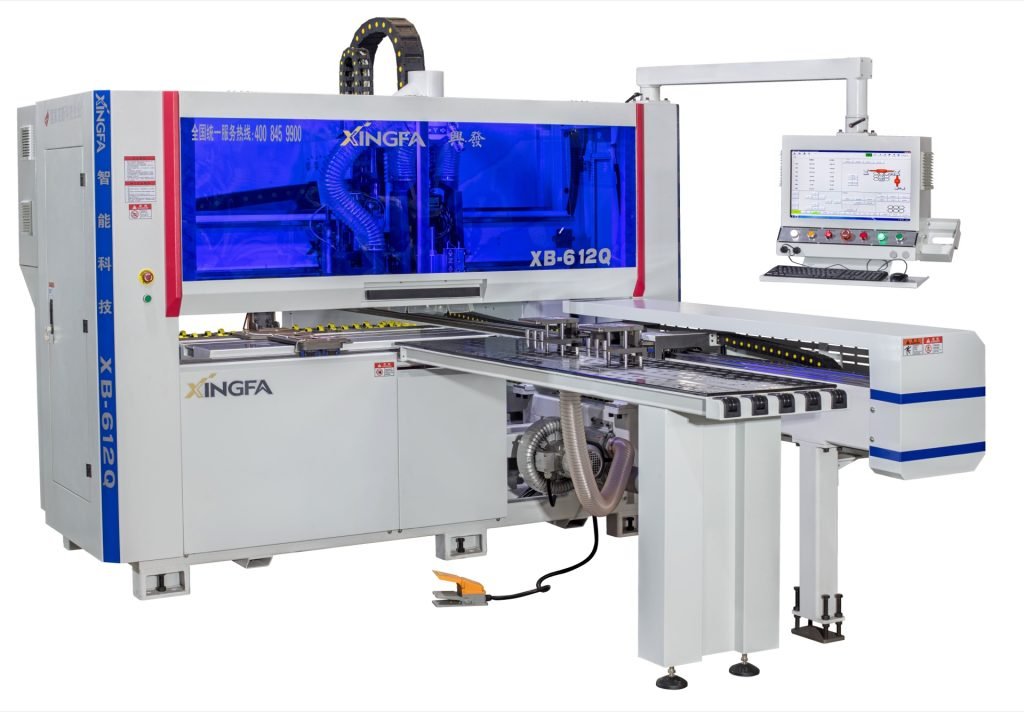
A single-drilling-box and a double-drilling-box arrangement should be evaluated against the work you need to perform. Additional equipment can change the available processing arrangement, but a label by itself does not establish the output of your production line. Review the documented functions and observe representative trials. For a starting comparison, Xingfa publishes separate product information for the XB612Q and XB612S. Confirm the final configuration in the quotation and avoid treating information from another model as an included feature.
3. Check orientation and component identification
Workpiece orientation is part of the process specification. Agree how operators identify the reference face, reference edge and the correct part for each job. Include mirrored components or visually similar left and right parts in the trial where these are relevant to your production. Review what information travels with the part between upstream processing and drilling. A clear identification method supports consistent handling, but it should be tested in the actual workflow rather than assumed from an isolated machine demonstration. Document how an uncertain or mismatched part is held for review.
4. Verify the data handover with a real example
Ask which input methods and file formats are supported by the quoted control system and software combination. If your workflow uses labels, barcodes or information from design software, request a trial with a representative file and identification example. Do not assume that a familiar format name guarantees compatibility without checking the details. Agree who prepares the production data, who approves revisions and how the machine receives the correct version. Keep a record of the tested software and configuration so that later changes can be evaluated against a known working setup.
5. Include handling and inspection in the trial
Observe how the sample is introduced, located, processed and collected. Include the intended inspection step in your process comparison. If a throughput discussion is required, use the same component mix and state the assumptions about staffing, loading and downstream handling. Reported cycle time for one selected part is not the same as daily output for mixed orders. Record exceptions, changeovers and parts that need additional handling. These observations help you discuss a practical production arrangement without converting a short demonstration into an unsupported production guarantee.
6. Keep measurable acceptance evidence
Agree which dimensions and assembly relationships will be checked, which measurement method will be used and who will record the result. Use approved drawings and an identified sample set. Preserve the relevant programs or file references with the results where your process allows this. If an issue appears, distinguish material, drawing, data and equipment questions before requesting another comparable trial. The acceptance record should show the scope that was actually demonstrated. Requirements that were not tested should remain clearly identified for later confirmation rather than disappearing into a general statement that the machine passed.
Frequently asked questions
Is the largest configuration always preferable? Selection should follow the workpiece range, required operations and the handling method you can support. Can a machine replace the need to control drawings and labels? No; those remain part of the production process. What should accompany an initial inquiry? Send representative drawings, a component list, the intended data workflow and the quality checks you use. The CNC drilling category provides a useful starting point for identifying candidates, followed by a configuration-specific discussion and sample verification.
选择数控六面钻,应从真实零件图和孔位需求开始,而不是只比较型号名称。真正需要核对的是:拟购配置如何处理你的工件尺寸、孔位组合和生产数据。建议准备一组具有代表性的柜体零件,其中包括目前加工最容易出问题的部件。与不同配置进行讨论时尽量使用同一组样品,避免演示工件不同,导致看上去的表现没有可比性。
一、把加工要求说完整
对每件样品,说明需要加工的面、孔位、孔尺寸以及是否涉及槽或其他工序。图纸上的要求与实际采用的加工方法,应分别讨论。请供应方确认哪些操作可以在约定流程中完成,哪些需要增加搬运或其他设备。适用范围和限制必须落实到所报配置。“六面钻”是设备类别名称,不能据此推定所有孔方向、刀具组合和零件形状都一定适用。
二、用同一组试样比较配置
单钻包、双钻包等配置,应结合自己的加工任务评估。增加配置可能改变加工安排,但不能仅凭名称就推定整条线的实际产出。可先阅读XB612Q与XB612S的独立产品资料,再围绕代表工件安排试样。最终以报价确认的配置为准,不把其他型号资料中的功能视为默认包含。
三、确认工件方向与身份
工件朝向也是工艺要求的一部分。需要明确基准面、基准边和订单零件如何识别。日常有镜像件或外观相似的左右件时,应把它们放入试样清单,并核对上道工序到钻孔之间传递什么信息。识别方式要在实际流程里验证,不能只看单机演示就认定交接不会出错。遇到身份或方向不确定的零件,应有明确的暂存与复核办法。
四、用真实数据验证衔接
请供应方说明所报控制系统与软件组合支持的数据输入方式和文件格式。使用标签、条码或设计软件输出时,应带一份真实文件和识别样例进行验证,不能仅凭格式名称相同就认定完全兼容。还要明确谁生成加工数据、谁审核修改,以及设备如何取得正确版本。记录试验时的软件与配置,便于以后升级或调整时复核。
五、把上下料与检验纳入试机
观察样品如何上料、定位、加工和收取,并把计划采用的检验步骤计入流程。讨论节拍时,应使用相同的零件组合,同时说明人员、上料和下道搬运的假设。某一件样品的循环时间,不能直接等同于混合订单的日产量。规格切换、例外工件和额外搬运都值得记录,这些信息有助于形成更实际的配置讨论。
六、保留可以复核的验收证据
在试机前商定需要检查的尺寸与装配关系、测量方法和记录责任,使用确认过的图纸和编号样品。条件允许时,把相关程序或文件编号与检测结果一起保存。发现偏差后,应分别核对材料、图纸、数据与设备因素,再安排可比试验。未测试的要求要继续保留为待确认项,不能被一句笼统的“试机通过”替代。
常见问题
“配置越大越合适吗?”应结合工件、工序和上下料能力判断。“设备能代替图纸与标签管理吗?”这些仍是生产流程的一部分。“首次询价提供什么?”建议准备零件图、工件清单、数据流转方式与质量检查要求,再从数控钻孔设备目录中筛选候选机型。